

How to Care for Cashmere Sweaters: The Definitive Guide to Longevity
What if the "Dry Clean Only" tag on your finest cashmere is more of a suggestion than a command?
It's a natural hesitation. Entrusting a significant investment to a washing machine, or even your own hands, can feel like a gamble. The fear of a shrunken silhouette, the frustration of pilling under the arms, and the risk of damage from improper storage are real concerns that lead many to rely on dry cleaners, often unaware that the chemicals used can strip the natural lanolin from the delicate fibers over time.
This guide offers a more considered approach. We will provide the precise, repeatable method for how to care for cashmere sweaters, ensuring their exceptional softness and structure remain intact for a decade, not just a season. You will master the professional techniques for gentle washing, effective de-pilling, and secure storage, transforming anxiety into a confident ritual that preserves the integrity of your finest knitwear.
Key Takeaways
- Master how to care for cashmere sweaters by learning the correct washing ritual, from pre-treating stains to using the precise water temperature.
- Discover professional techniques like the 'Towel Roll' and 'blocking' to dry your garment efficiently and restore its original silhouette.
- Learn the single most important rule for storing cashmere to preserve its shape and why cleaning your knitwear before storage is essential.
- Understand how proper care extends the life of your knitwear, aligning with a sustainable 'Buy Better, Keep Longer' philosophy.
The Nature of Cashmere: Why Luxury Requires Specific Care
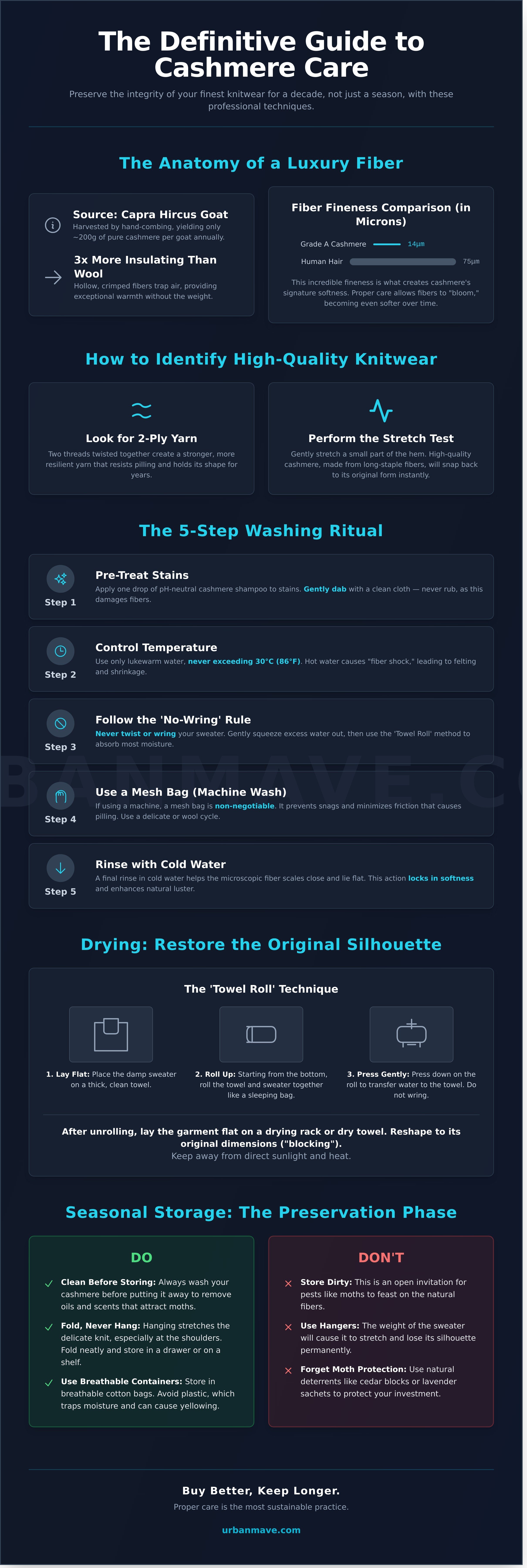
To master how to care for cashmere sweaters, one must first respect the fiber itself. Cashmere is not a manufactured textile; it is a precious natural material, the fine undercoat of the Capra hircus goat. These animals endure the harsh climates of the Himalayas and Mongolia, and their downy fleece is an evolutionary marvel of insulation. This fleece is harvested by hand-combing, a gentle process that yields only about 200 grams of pure cashmere per goat annually. The remarkable nature of cashmere dictates its value and the specific maintenance it requires. It is not inert fabric. Cashmere is a living fiber that requires hydration, not just cleaning.
The secret to cashmere's exceptional warmth lies in its hollow, crimped structure. These nearly invisible air pockets trap heat, making the fiber up to three times more insulating than sheep’s wool, but without the corresponding weight. The quality and softness of a sweater are dictated by the fiber's diameter, measured in microns. For context, a single human hair is about 75 microns thick. Grade A cashmere, the only grade used in truly luxurious knitwear, measures a remarkable 14 to 15.5 microns. This incredible fineness is what creates its signature softness against the skin. With proper care, these fibers relax and "bloom," creating an even softer, more luxurious surface over time. A quality cashmere piece is an investment that truly improves with age.
The Science of the Fiber
Each cashmere fiber is covered in microscopic scales. When subjected to high heat or aggressive agitation, these scales open and interlock permanently, a process known as felting. This is what causes shrinkage and a loss of softness. The fibers also contain natural oils that are essential for maintaining elasticity and luster. Many commercial detergents and dry-cleaning solvents like perchloroethylene can strip these vital oils, leaving the yarn brittle and lifeless. The 'Dry Clean Only' label is often a manufacturer's legal safeguard, not a biological command. Gentle hand washing with a pH-neutral soap is almost always the superior method for long-term preservation.
Identifying High-Quality Knitwear
A sweater's durability is woven into its construction. Always look for 2-ply cashmere, where two fine threads are twisted together to create a single, more resilient yarn. This technique produces a balanced and stable knit that resists pilling and holds its shape for years. Single-ply knits are less expensive but are far more susceptible to developing holes. You can perform a simple stretch test in-store: gently stretch a small part of the cuff or hem. High-quality cashmere will snap back to its original form instantly. A slow recovery signals the use of weaker, short-staple fibers. Urban Mave's focus on long-staple fibers, those exceeding 36mm, is a deliberate choice to ensure longevity and minimize the initial pilling that plagues inferior knits.
The Washing Ritual: Hand vs. Machine Cleaning in 2026
Properly washing a cashmere sweater is a precise ritual. It preserves the integrity of this natural fiber for years. The process isn't complex, but it demands attention to detail. Whether you choose the traditional hand wash or a modern machine cycle, the principles remain the same. Gentle handling is everything.
The foundation of how to care for cashmere sweaters rests on a five-step process. Each step protects the delicate fibers from damage, ensuring your garment maintains its shape and softness.
- Step 1: Pre-treat Stains. Apply a single drop of a specialized, PH-neutral cashmere shampoo directly to any stain. Gently dab the area with a clean cloth. Never rub. Aggressive friction can permanently damage the fibers before the wash even begins.
- Step 2: Control the Temperature. Use only lukewarm water. The temperature must never exceed 30°C (86°F). Hot water causes "fiber shock," a reaction where the delicate scales of the cashmere seize up, leading to felting and shrinkage.
- Step 3: Follow the 'No-Wring' Rule. Never twist or wring out your sweater. This action stretches the knit and can break the fine fibers. Instead, gently squeeze excess water out. Lay the garment flat on a thick, clean towel, roll it up, and press firmly to absorb moisture.
- Step 4: Use a Mesh Laundry Bag. If you opt for a machine wash, a mesh bag is non-negotiable. It creates a protective barrier against the machine's drum, preventing snags and minimizing the friction that causes pilling.
- Step 5: Rinse with Cold Water. A final rinse in cold water helps the microscopic scales on each fiber close and lie flat. This simple action locks in the material's signature softness and enhances its natural luster.
The Case for Hand Washing
The hand-washing method remains the gold standard for luxury knitwear. It offers complete control. The 'soak and squeeze' technique is simple and effective. Submerge the sweater, gently squeeze the suds through the fabric, and let it rest. This gentle immersion method is a cornerstone of proper cashmere care, a technique also detailed in Good Housekeeping's guide to washing cashmere. Remember that less is more with detergent; one teaspoon (5ml) per 4 liters of water is sufficient. Crucially, never soak cashmere for longer than 30 minutes. Extended submersion can cause the fibers to swell and lose their delicate structure.
Navigating Modern Machine Cycles
Modern washing machines, as of 2026, offer cycles designed for delicate woolens. The 'Hand Wash' or 'Wool' setting minimizes agitation. It uses a slow, rocking motion rather than a full tumble, simulating a gentle soak. However, you must take manual control of the spin speed. Cap the revolutions per minute (RPM) at 600 or lower. Any faster, and the centrifugal force will stretch the garment. Despite these advancements, the machine is not always an option. Ultra-fine knits with a GSM below 150 or sweaters with intricate embellishments demand the precision of hand washing.
The right technique ensures your cashmere remains a timeless part of your wardrobe. Using the correct tools is equally important. For a cleanser formulated to preserve these natural fibers, explore our specialized cashmere care collection.
Drying and De-pilling: Restoring the Original Silhouette
The life of your cashmere sweater is defined not just by how it's washed, but how it's dried. Heat and gravity are the primary adversaries of natural wool. A machine dryer will shrink and felt the delicate fibers, while hanging a wet sweater will irrevocably stretch its silhouette. The correct process is methodical and gentle, ensuring the garment returns to its intended shape and texture.
First, remove excess water. Never wring or twist the fabric. This action breaks the fine fibers and ruins the sweater's structure. Instead, use the 'Towel Roll' technique. Lay a clean, thick towel on a flat surface. Place your damp sweater on the towel, smoothing out the body and arms. Tightly roll the towel and sweater together. Press down firmly along the entire roll to transfer moisture from the cashmere into the towel. Unroll it; the sweater will now be damp, not saturated.
The Art of Blocking
Blocking is the essential step for reshaping your sweater. Before washing, take two simple measurements: the width from armpit to armpit and the length from the shoulder to the hem. After using the towel technique, lay the damp sweater on a flat mesh drying rack. Avoid hangers at all costs. Gently pat and adjust the sweater to match your pre-wash measurements. This ensures it dries to its original, perfect fit. Place the rack in a well-ventilated area away from direct sun or heat. Proper air circulation is the goal; expect a drying time of 24 to 48 hours.
Managing the Inevitable Pill
Pilling is not a sign of poor quality. It is an inherent characteristic of fine, natural wools. The small fiber balls, or pills, form when the shorter, delicate surface fibers rub together and tangle. This is a direct result of the unique properties of cashmere fiber, which is prized for its exceptional softness. You will notice this most in 'friction zones' like under the arms, along the sides, and on the cuffs. Understanding how to care for cashmere sweaters means managing these pills with precision.
A hierarchy of tools exists for this task. Your approach should prioritize fiber preservation.
- The Cashmere Comb: This is the most effective and gentle method. Lay the sweater flat and hold the pilled area taut. Use the comb to make short, light strokes in one direction. The comb catches the pills without pulling or tearing the underlying yarn.
- The Electric Shaver: A faster option for extensive pilling, but one that requires caution. Use a fabric shaver specifically designed for knitwear, preferably with a height-adjustable guard. Skim it lightly over the surface. Never press down, as the blades can catch and cut the yarn, creating a hole.
Regular, gentle de-pilling after washing will maintain the clean, smooth surface of your cashmere. Avoid abrasive de-pilling stones, which can thin the fabric and reduce the sweater's lifespan by more than 50% over time.
Seasonal Storage and Protection: Defeating the Moths
Proper seasonal storage is not an afterthought. It is a critical step in a disciplined care routine. The primary rule is absolute: never hang a cashmere sweater. The weight of the garment, combined with gravity, will permanently distort the shoulder structure and stretch the delicate fibers. Folding is the only correct method. Mastering how to care for cashmere sweaters through the warmer months ensures they return to your wardrobe in perfect condition, season after season.
Before any sweater is stored, it must be impeccably clean. This is a mandate, not a suggestion. The larvae of the common clothes moth, Tineola bisselliella, are drawn to keratin, the protein in wool. However, they are most attracted to soiled areas. Invisible traces of skin cells, body oils, perfume, or food residue provide the essential nutrients they need to thrive. Storing a worn sweater is an open invitation for damage. A clean sweater is an unappealing target.
The choice of storage container is equally important. Natural fibers require air circulation to prevent moisture buildup, which can lead to mildew or yellowing over a 6-month storage period. Avoid plastic bins or bags. Instead, choose breathable containers like cotton garment bags or acid-free archival boxes. Store them in a cool, dark, and dry location, such as a closet shelf or under a bed, where the temperature remains stable around 18°C (65°F).
Creating a Moth-Proof Environment
A protected environment is your best defense against pests. Natural deterrents are effective and do not impart the toxic chemicals of traditional mothballs. Consider these three precise tools for your storage strategy:
- Cedarwood Blocks: The aromatic oils in cedar naturally repel moths. Place two to three blocks or rings in your storage container. The scent fades within 3 to 6 months. To reactivate them, lightly sand the surface with 220-grit sandpaper to expose fresh, fragrant wood.
- Vacuum-Sealed Bags: These are not recommended for long-term cashmere storage. While excellent for short-term space-saving, the intense compression can crush the delicate fiber structure and create permanent, deep-set wrinkles over a period longer than 3 months.
- Pheromone Traps: These devices serve as a proactive monitoring system. They use a specific pheromone to attract and trap male moths, alerting you to a potential infestation before significant damage occurs. They do not eliminate the problem, but they provide critical early intelligence.
The Correct Way to Fold
A precise folding technique minimizes stress on the fibers and prevents hard creases from setting. The 'Rule of Thirds' is a simple and effective method. Lay your sweater face-down on a clean, flat surface. Fold one arm straight across the body, then fold the other arm over it. Finally, fold the bottom third of the sweater up, then fold the top third down over the bundle to create a neat rectangle. For exceptionally delicate or light-colored cashmere, place a sheet of acid-free tissue paper inside the folds. This prevents any potential color transfer and provides an extra layer of protection. When you retrieve your sweaters for the cooler months, they will be ready to wear. Pair them with tailored trousers for a look that defines The Smart Casual Edit.
This disciplined approach to storage protects your investment. It ensures the piece you valued last winter retains its shape, softness, and integrity for the next. Discover knitwear crafted to endure.
The Urban Mave Approach to Timeless Knitwear
Understanding how to care for cashmere sweaters is the final step in a long journey. It begins not in your wardrobe, but on the vast grasslands of Mongolia. At Urban Mave, our philosophy is built on a simple, yet uncompromising principle: Buy Better, Keep Longer. This approach informs every piece we curate, ensuring that what you own is not a fleeting trend, but a lasting investment in quality and design.
We source our materials with meticulous discipline. Our collections are crafted exclusively from Grade-A, long-staple Mongolian cashmere. The fibers are harvested from goats enduring winter temperatures that drop below -40°C, resulting in an exceptionally fine fleece. Each fiber measures over 36mm in length and just 14 to 15.5 microns in diameter. This natural strength translates directly to a garment that resists pilling and retains its shape for years, simplifying its care. This is a direct response to a fashion industry where the average garment is worn only seven times. We believe in creating pieces that become part of your story for a decade, not a single season.
Our commitment extends to the provenance of our materials. We partner with cooperatives that champion ethical herding practices and transparent production. This ensures the sustainability of the craft and the integrity of the final product. True luxury is not just about the object itself, but the knowledge of its respectful origin.
Investing in Quality
We select knitwear that merges modern, clean silhouettes with the enduring quality of traditional craftsmanship. This balance ensures each piece is relevant, yet timeless. The true value is revealed in its cost-per-wear. A sweater designed for longevity offers a superior return on investment compared to disposable fashion. It becomes a reliable staple of your personal style. Explore pieces designed with this philosophy in our latest Knit Polo Collection.
A Minimalist Care Kit
The practical knowledge of how to care for cashmere sweaters does not require a complex set of tools. It requires only three essentials to preserve the integrity of the natural fiber for a lifetime.
- A Cashmere Comb: Used gently after every few wears to remove the small pills that naturally form on new garments.
- A pH-Neutral Shampoo: A mild, specialized wash preserves the natural lanolin in the fibers, keeping them soft and conditioned.
- A Mesh Laundry Bag: Protects the sweater from snags and stretching during the gentle wash cycle or a careful hand wash.
This simple toolkit is all you need. A consistent care routine takes less than 15 minutes a month. A quick de-pilling session and a seasonal wash are enough to maintain your knitwear's impeccable condition. A well-cared-for garment is more than an item of clothing. It's a legacy of quality, a testament to conscious ownership, and the ultimate expression of personal style.
A Future of Enduring Elegance
Mastering the art of cashmere care is simple. It relies on precise techniques. Hand-washing with a pH-neutral detergent below 30°C preserves the fiber's integrity. Storing your knitwear flat with natural cedar blocks protects it from damage for the 9-month off-season. This knowledge is the foundation of how to care for cashmere sweaters for decades, not just seasons.
True longevity begins with superior materials. The Urban Mave approach is built on this principle. Our knitwear is crafted from premium long-staple fibers, ensuring minimal pilling and lasting softness. Each piece is designed for timeless elegance that transcends seasonal trends. Discover the Urban Mave Knitwear Collection and experience our commitment to craftsmanship. Enjoy complimentary shipping on all curated designer goods.
With the right care, your investment will only grow in character and softness.
Frequently Asked Questions
Can I wash a cashmere sweater that says 'Dry Clean Only'?
Yes, you can gently hand wash a cashmere sweater even if the label suggests dry cleaning. This label is often a precaution from manufacturers. For best results, use a specialized cashmere shampoo in cool water, under 30°C. Submerge the sweater, gently squeeze the suds through the fabric, and rinse thoroughly. This method is often gentler on the natural fibers than the chemical processes used in dry cleaning, preserving the sweater's softness.
How often should I actually wash my cashmere sweaters?
You should wash a cashmere sweater after wearing it three to five times, not after each use. Cashmere is a natural, breathable fiber with inherent antibacterial properties that keep it fresh. Over-washing can strip the fibers of their natural lanolin, which contributes to their exceptional softness. Between wears, simply airing out the garment is usually sufficient to refresh it. This careful approach ensures the longevity of your investment piece.
Why is my brand new cashmere sweater pilling already?
Pilling is a natural characteristic of cashmere and is not an indication of low quality. It occurs when the shorter, looser fibers on the yarn's surface rub together during wear, creating small balls. This is most common with new garments and will lessen after the first few washes. You can easily remove pills with a cashmere comb or a fabric shaver, which restores the sweater's smooth, refined surface and improves its appearance over time.
What is the best way to get wrinkles out of cashmere without an iron?
The safest and most effective method for removing wrinkles from cashmere is using a handheld steamer. Hold the steamer at least 15 centimeters away from the garment to relax the fibers without direct, damaging heat. Alternatively, you can hang your sweater in a steamy bathroom for 20 to 30 minutes. The moisture will gently release the creases, helping the sweater return to its natural, smooth drape without any risk of scorching.
Can I use hair shampoo to wash my cashmere if I run out of wool wash?
Yes, in the absence of a proper wool wash, a mild, pH-neutral baby shampoo is an acceptable substitute. Adult hair shampoos often contain harsh detergents or silicones that can damage delicate cashmere fibers. When using baby shampoo, use a very small amount, approximately 5 milliliters, dissolved in cool water. This is an important part of how to care for cashmere sweaters in an emergency, ensuring the fibers are cleaned gently and remain soft.
How do I fix a cashmere sweater that has shrunk in the wash?
You can often restore a shrunken cashmere sweater by soaking it for 30 minutes in lukewarm water mixed with a hair conditioner. Use approximately 15 milliliters of conditioner per liter of water to relax the fibers. After soaking, gently squeeze out the excess water without rinsing. Lay the damp sweater flat on a clean towel and carefully stretch it back to its original size and shape before allowing it to air dry completely.
Is it okay to steam cashmere instead of washing it?
Steaming is an excellent method for refreshing cashmere between washes, but it doesn't replace them. A steamer can kill over 99% of odor-causing bacteria and release wrinkles, making it ideal for a quick refresh. However, it will not remove embedded dirt, skin cells, or oils from the fibers. For true cleanliness and to maintain the garment's integrity, a proper hand wash is still necessary after several wears. Steaming is a supplement, not a substitute.
What should I do if I find a small hole in my cashmere sweater?
You should repair a small hole immediately to prevent it from expanding. For a very minor hole, smaller than 2 millimeters, a skilled hand can perform a near-invisible repair with a needle and a single ply of matching cashmere yarn. For larger holes or more complex damage, we recommend a professional mending service that specializes in knitwear. Prompt action is essential to preserving the structure and timeless quality of your garment.


