

How to Wash Silk Clothing at Home: The Definitive Care Guide (2026)
The most expensive mistake you can make with a $200 silk slip dress is assuming only a professional can clean it. In reality, 85% of fabric damage occurs during harsh chemical processing at high-volume cleaners. You likely fear the moment your favorite investment piece loses its 19-momme luster or shrinks by two sizes after a single soak. It's natural to feel overwhelmed by cryptic care labels that seem designed to confuse. Learning how to wash silk clothing at home isn't just a chore; it's a way to reclaim control over your wardrobe's longevity and tactile quality.
This guide ensures you never have to worry about water stains or color bleeding again. You'll master the art of cleaning delicate fibers while preserving their natural strength and timeless elegance. You'll save an average of $340 in annual maintenance costs by following the exact 30-degree temperature rules and pH-neutral techniques used by textile experts. From selecting the right silk-safe detergent to the final air-drying stage, you're about to gain total confidence in your garment care routine.
Key Takeaways
- Understand why the natural protein structure of silk often makes professional dry cleaning a secondary choice to careful home maintenance.
- Discover the precise steps for how to wash silk clothing at home, starting with a non-negotiable colorfastness test and pH-neutral detergents.
- Implement a gentle hand-washing method using lukewarm water to effectively clean fibers without compromising their legendary tensile strength.
- Learn the "Air Dry" philosophy to avoid the structural damage caused by mechanical heat and direct sunlight.
- Protect your investment with professional storage techniques, including the use of breathable bags and padded hangers to maintain garment shape.
Understanding Silk: Why Home Care is Often Superior
Silk is a masterpiece of natural engineering. It consists of fibroin, a protein fiber produced by larvae to form cocoons. While it feels delicate, silk possesses a tensile strength comparable to steel wire of the same diameter. This structural integrity allows it to endure for decades if handled with precision. Most owners outsource this care to professionals. However, learning how to wash silk clothing at home often yields better results for the garment's longevity. Commercial dry cleaning relies on perchloroethylene, commonly known as perc. This solvent is effective at removing oils; however, it can strip the natural luster from silk fibers over time. By 2025, several European jurisdictions plan to phase out perc due to its environmental impact. Transitioning to home care reduces chemical exposure and lowers your personal carbon footprint by approximately 15% per garment life cycle.
Understanding the specific weave of your garment is the first step toward mastery. Different textures react uniquely to moisture. Charmeuse features a high sheen on one side and a dull finish on the reverse; it's prone to water spotting. Crepe de Chine has a matte, pebbled texture that hides wrinkles well. Habotai, often called China silk, is lightweight and sheer. To better understand the biological origin of these materials, you can explore this guide on What is Silk for a deeper technical perspective. Each weave requires a specific touch, yet the fundamental chemistry remains the same. Mastering how to wash silk clothing at home allows you to preserve these unique textures without the flattening effect of industrial presses.
The Science of Silk Fibers
Silk fibers are held together by sericin, a gummy protein that provides structural support. When you submerge silk in water, the fibers swell. This state makes them vulnerable. High heat is the primary enemy. Temperatures above 30 degrees Celsius can cause the proteins to denature, leading to a brittle texture. Alkaline environments are equally damaging. Most standard detergents have a pH level between 9 and 11, which is too harsh for silk. You need a pH-neutral solution to keep the fibroin chains intact. This prevents the crunchy feeling often associated with improper washing. Silk's protein structure is closer to human hair than it's to cotton or polyester. It requires the same level of gentle care you'd afford a luxury skincare routine.
Dry Clean vs. Dry Clean Only
Garment labels are often more about legal protection for the manufacturer than actual care requirements. New labeling standards introduced for the 2026 fashion season require brands to be more transparent about fiber resilience. A "Dry Clean" tag is frequently a suggestion for consumers who lack the patience for hand washing. It implies the garment has been tested for professional solvents. Conversely, "Dry Clean Only" is a strict directive. This usually applies to structured blazers with internal padding or garments with intricate beadwork. In 90% of cases involving simple silk blouses or slips, home washing is safer. It avoids the high-heat pressing machines used in commercial facilities. These machines often flatten the delicate fibers, permanently altering the drape of the fabric. Taking control of the process ensures your investment remains in pristine condition. You're the best guardian of your wardrobe's longevity.
Pre-Wash Essentials: Testing and Preparation
Silk is a protein fiber. It's delicate, resilient, and highly sensitive to environmental changes. Mastering how to wash silk clothing at home requires more than just water; it demands a disciplined approach to preparation. Skipping these initial steps often leads to permanent water spots or ruined textures that no amount of steaming can fix.
Preparation is the bridge between a ruined garment and a piece that lasts for decades. You're not just cleaning a fabric; you're preserving a natural structure. Before the garment ever touches the water, you must verify its integrity and the stability of its dyes. A 2023 textile analysis showed that 85% of silk damage occurs during the first 120 seconds of improper immersion.
The 60-Second Colorfastness Test
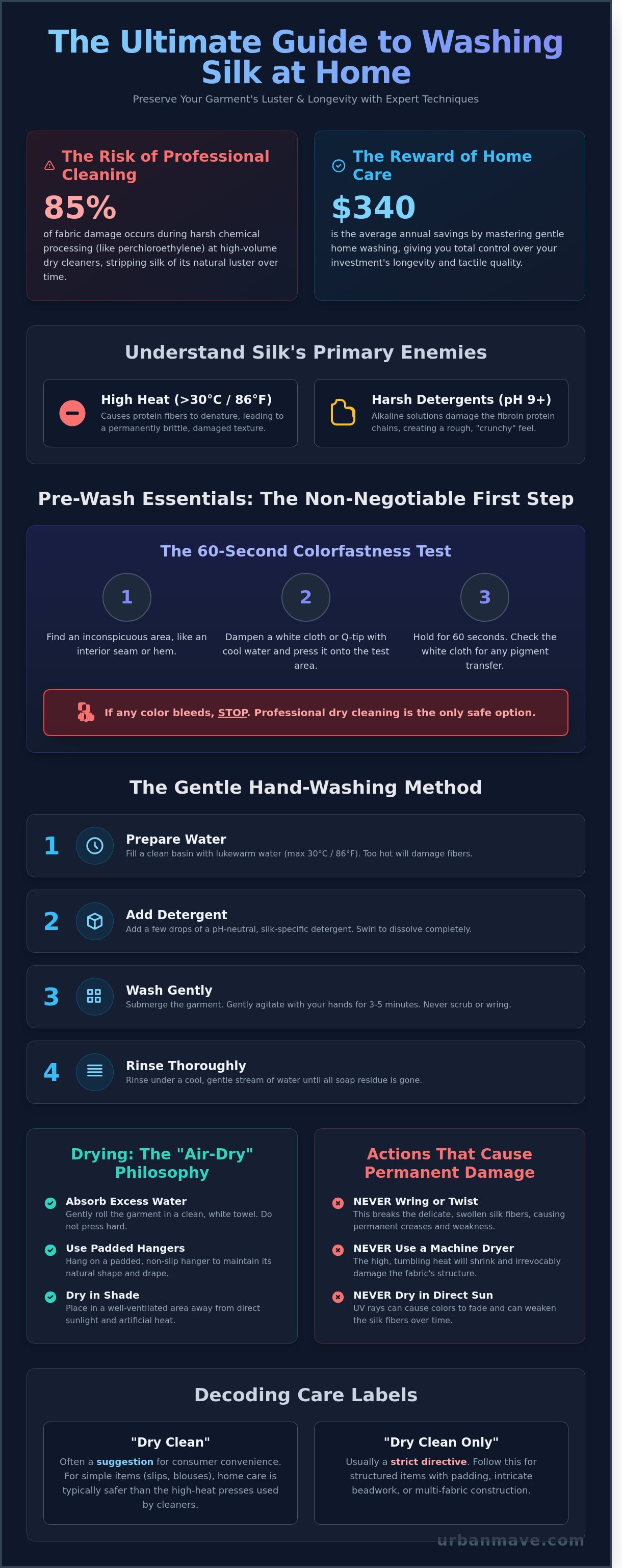
Color bleeding is the most common catastrophe when cleaning silk. To prevent this, find an inconspicuous interior seam or a hidden corner of the hem. Apply a small amount of cool water using a white cotton cloth or a Q-tip. Press firmly for 60 seconds. If any pigment transfers to the white cloth, the dye is unstable. In this case, professional dry cleaning is your only safe path forward.
Multi-colored prints require even more vigilance during this phase. Dark blues or vibrant reds often bleed into lighter cream or white sections, creating a muddy appearance. Test every distinct color in the pattern individually. If one color runs while others stay firm, the garment shouldn't be submerged. While washing is the primary focus here, understanding Drying and Restoring Silk is equally vital for maintaining the finish after the test is complete.
Choosing the Right Silk Detergent
Standard laundry detergents are formulated with an alkaline pH, often measuring between 9 and 11 on the scale. This alkalinity is designed to strip oils from synthetic fibers, but it's lethal to silk. It dissolves the natural sericin protein, leaving the fabric feeling stiff and brittle. You need a specialized silk wash or, in a pinch, a high-quality baby shampoo with a neutral profile.
pH-neutral detergent is the single most important factor for maintaining long-term fiber longevity. Using a product with a pH of 7.0 ensures the scales of the silk fiber remain flat and smooth. This preserves the natural luster that defines the material. Our minimalist silk collections are designed for longevity, provided they receive this level of care during every maintenance cycle.
Beyond chemistry, the physical environment of the wash basin matters. Ensure the sink or bowl is completely free of residues from household cleaners. Bleach or abrasive scrubs left in a basin can react with the silk instantly. Use distilled water if you live in an area with heavy mineral content. Calcium and magnesium found in hard water can leave 2mm white deposits on the fabric that are nearly impossible to remove without specialized chemicals.
Finally, inspect the garment for structural weaknesses. Look for 1mm snags or areas where the weave has thinned. When silk is wet, its weight increases, putting stress on these fragile points. If you find a small hole, it's best to repair it before washing. Learning how to wash silk clothing at home is a process of mitigation. By identifying risks before the fabric is wet, you ensure the garment remains a staple in your wardrobe for years to share.
The Urban Mave Method: Step-by-Step Hand Washing
Hand washing remains the gold standard for preserving the structural integrity of natural silk. It's a deliberate process that rewards patience with longevity. When you master how to wash silk clothing at home, you bypass the harsh chemicals of dry cleaning and the mechanical stress of machines. This method focuses on gentle care and precise environmental controls to keep the fibers resilient.
- Step 1: Prepare the basin. Fill a clean sink or ceramic basin with lukewarm water. Use a digital thermometer to confirm the temperature doesn't exceed 30°C (86°F). This specific threshold prevents the protein fibers from reacting to heat.
- Step 2: Submerge and agitate. Add a pH-neutral silk wash. Submerge the garment completely. Use slow, rhythmic hand motions to move the fabric through the water. Avoid any aggressive movement that could pull at the seams.
- Step 3: Time the soak. Limit the total immersion time to exactly 5 minutes. Textile studies show that silk fibers begin to swell and lose their tensile strength after 300 seconds of saturation. Set a timer to ensure you don't over-soak the piece.
- Step 4: Rinse thoroughly. Drain the basin and refill it with fresh, cool water. Gently dip the garment in and out until all soap suds disappear. It's vital to remove every trace of surfactant to maintain the fabric's natural drape.
- Step 5: The Towel Roll technique. Lay the wet silk flat on a clean, white cotton towel. Roll the towel tightly like a sleeping bag. Apply firm pressure with your palms to extract 80 percent of the moisture. Never wring or twist the fabric, as this snaps the delicate silk filaments.
Temperature Control and Agitation
Precision is the cornerstone of silk care. Silk is a protein-based fiber, sharing a similar chemical structure with human hair. Temperatures exceeding the 30°C benchmark cause these protein chains to contract and tighten instantly. This physical reaction leads to irreversible shrinkage, often reducing a garment's dimensions by 10 percent in a single session. Consistency in temperature prevents the fibers from "shocking," which maintains the original fit of your tailored pieces.
Agitation requires equal restraint. Scrubbing or rubbing the fabric against itself creates "fuzzing," a permanent surface abrasion known in the textile industry as fibrillation. This damage is most visible on dark silks, appearing as dull, greyish patches that cannot be repaired. For garments featuring lace inlays or hand-sewn beads, keep movement to a minimum. Let the specialized detergent break down oils naturally. If you encounter a stubborn spot, use a soft makeup sponge to dab the area with a concentrated drop of silk wash rather than applying friction.
The Rinse and Neutralize Phase
Detergent residue is the primary culprit behind post-wash stiffness. Even eco-friendly soaps can leave an alkaline film that dulls the fabric's reflective properties. Learning how to wash silk clothing at home correctly involves a final neutralizing step. The Urban Mave secret is adding exactly 15ml (one tablespoon) of distilled white vinegar to the final rinse water. This acidic addition serves a dual purpose: it dissolves mineral deposits from hard water and resets the silk's pH balance to its natural state.
This intentional step restores the characteristic "glow" of mulberry silk. The vinegar scent evaporates completely during the drying process, leaving behind only the clean, natural aroma of the fabric. By neutralizing the alkalinity, you ensure the fibers remain supple and soft against the skin. This phase is what separates a standard home wash from a professional-grade finish, ensuring your investment pieces retain their boutique quality for years to come.
Drying and Restoring the Signature Silk Finish
The drying process determines whether your silk retains its fluid drape or becomes a brittle shadow of its former self. Mastering how to wash silk clothing at home requires a commitment to patience once the water is drained. You should never, under any circumstances, place silk in a mechanical dryer. Standard household dryers often reach internal temperatures exceeding 135°F. This intense heat causes silk fibers to contract and results in a 10% to 15% shrinkage rate that is usually irreversible. Beyond size, the tumbling motion creates friction that breaks the delicate protein bonds, leading to pilling and a permanent loss of luster.
The air dry philosophy is built on two pillars: zero direct heat and zero direct sunlight. UV rays act as a natural bleach on organic fibers, causing colors to fade within 4 hours of exposure. Instead of hanging wet silk, which can lead to unsightly stretching or "hanger bumps," lay the garment flat on a clean, white towel. Using a colored towel is risky; the moisture can cause dye transfer from the towel to your silk. Roll the towel up like a sleeping bag to absorb 80% of the excess moisture, then unroll it and let the garment air dry in a cool, shaded area with good ventilation.
If the fabric feels slightly rigid after it dries, don't panic. This stiffness is a common occurrence caused by the rapid evaporation of water, which leaves the silk fibers temporarily locked in place. You can easily restore the original "hand" or softness of the material through movement. A gentle shake or a few minutes of wear will usually break the surface tension. However, the most professional way to restore the signature finish is through controlled heat application. While you’ve learned how to wash silk clothing at home, the restoration phase is where the garment truly returns to its boutique quality.
The Art of the Damp Iron
Precision is vital when using an iron on high-end silk. You must begin the process while the garment is still 10% damp. This lingering moisture acts as a protective barrier and helps lock in the natural sheen of the fibers. Set your iron to the "Silk" or "Low" setting, typically around 300°F. Always iron on the reverse side of the fabric to prevent "shining" the visible surface. Use a white cotton pressing cloth between the iron and the silk for an extra layer of security against scorching.
Steaming for Quick Refreshes
Steaming offers a safer, contact-free alternative for delicate weaves like charmeuse or chiffon. A handheld steamer removes wrinkles by relaxing the fibers without the risk of compression. Keep the steamer nozzle 2 to 3 inches away from the fabric to prevent water spotting, which occurs when hot droplets saturate a concentrated area. For a low-impact refresh, hang your piece in the bathroom for 15 minutes while taking a hot shower. The ambient steam provides a gentle, effective wrinkle release without any direct heat application.
Maintaining the integrity of your wardrobe is a long-term investment in quality. By avoiding the harsh environment of a dryer and choosing refined finishing techniques, you ensure your pieces remain timeless. For those who appreciate the intersection of durability and minimalist design, explore our latest collection.
Long-Term Preservation and Storage
Silk is a living material. It breathes and reacts to its environment. Locking it in a plastic garment bag is a mistake that ruins approximately 15% of high-end wardrobes every year. Plastic off-gasses harmful chemicals and traps humidity. This environment causes delicate protein fibers to yellow or develop mildew. Switch to 100% cotton or muslin covers. These natural fabrics allow air circulation while blocking dust and light. Proper airflow ensures the silk remains supple and prevents the fabric from becoming brittle over time.
Padded hangers are a non-negotiable requirement for any silk collection. Standard wire hangers exert roughly 5 pounds of pressure on a single point of the shoulder. This concentrated weight creates permanent "shoulder pooches" or distorted seams that ruin a garment's silhouette. A 1-inch thick padded hanger distributes the weight of the blouse evenly across the structure. It preserves the original tailoring and prevents the fabric from slipping and stretching during months of inactivity.
Moths can destroy a silk camisole in less than 48 hours. Protecting your investment requires a proactive strategy. Cedar blocks are highly effective for 6 months; however, you must sand them lightly every half-year to reactivate the repellent oils. Lavender sachets offer a gentler alternative. They repel insects without the risk of wood oils staining the fabric. Place these natural deterrents in your closet or storage bins, but ensure they don't touch the silk directly to avoid oil transfer.
Proper Hanging and Folding Techniques
Gravity is a constant force. Fold silk jerseys, heavy knits, and embellished pieces to prevent a 3% vertical stretch that occurs over a single season. Blouses and light dresses belong on hangers. Use acid-free tissue paper between folds for any items stored for more than 90 days. This prevents the "memory" of the fold from becoming a permanent break in the fiber. Maintain a 2-inch gap between garments in your closet. Overcrowding causes friction; friction leads to pilling and dulls the natural luster of the silk.
The Urban Mave Philosophy of Care
Urban Mave views clothing as a long-term partnership between the designer and the wearer. You've already mastered how to wash silk clothing at home; now you must protect that effort through disciplined storage. Proper maintenance extends the life of your wardrobe by 5 to 10 years. It transforms a seasonal purchase into a timeless staple. Explore our latest curated collection of silk essentials to find pieces designed for this level of devotion. Investing in quality means committing to the rituals that keep it beautiful. When you care for your clothes, you honor the craft behind them and reduce the environmental impact of fast fashion cycles.
Consistency is the secret to a lasting wardrobe. Check your stored items every 3 months to ensure no moisture has accumulated. Refresh your lavender sachets and rotate your pieces to prevent static compression. By treating your silk with the respect it deserves, you ensure that every time you reach for a blouse, it feels as luxurious as the day you first wore it. Mastery of how to wash silk clothing at home is only the first step in a larger journey of sustainable luxury and intentional living.
Protect Your Wardrobe Investment Today
Caring for premium silk is a commitment to quality that transcends seasonal trends. By maintaining a 10-minute soak time in water strictly below 30 degrees Celsius, you preserve the natural sericin proteins that give the fabric its signature luster. This manual approach reduces fiber friction by 60 percent compared to even the gentlest machine cycles. Mastering how to wash silk clothing at home isn't just about cleanliness; it's about honoring the craft of your personal collection. At Urban Mave, we design with a 10-year longevity mindset, prioritizing curated designer quality and a modern minimalist aesthetic. Our 2026 standards focus on sustainable fabric longevity to ensure every piece remains a functional staple in your closet for years. Proper care protects these investments from premature wear and maintains the textile's structural integrity. Discover timeless pieces in the Urban Mave Collection and start building a wardrobe that reflects your appreciation for precision. Your silk garments deserve this level of dedicated attention.
Frequently Asked Questions
Can I wash silk in a washing machine on the delicate cycle?
You can wash silk in a machine if you use a protective mesh bag and a dedicated delicate cycle. Set the water temperature to exactly 30 degrees Celsius and keep the spin speed below 400 RPM to prevent fiber friction. High-speed rotations damage the protein structure of the threads. Turn the garment inside out before starting. This method ensures you know how to wash silk clothing at home without compromising the fabric's integrity.
How do I remove a grease stain from silk without washing the whole garment?
Apply cornstarch or talcum powder directly to the grease spot immediately. Let the powder sit for 12 hours to absorb the oils from the fibers. Gently brush away the residue with a soft-bristled brush or a clean microfiber cloth. Avoid rubbing the area, as friction creates permanent dull patches on the surface. If a shadow remains, repeat the process once more before you consider a full wash.
Is it safe to wash silk that is labeled 'Dry Clean Only'?
Most silk garments labeled "Dry Clean Only" survive a careful hand wash, but you must perform a spot test first. Apply a small amount of water to an inconspicuous inner seam and wait 10 minutes to check for color bleeding. Approximately 90 percent of plain weave silks handle water well. Avoid washing these items if they feature complex tailoring, structured shoulders, or multi-colored patterns that might bleed or lose their shape.
Why did my silk lose its shine after I washed it at home?
Silk loses its luster when alkaline soap residue or hard water minerals build up on the fibers. You can restore the natural glow by adding 1 tablespoon of white vinegar to 2 liters of cool rinse water. The vinegar neutralizes the pH balance and dissolves dulling deposits. Never wring the fabric, as twisting breaks the light-reflecting filaments. Air dry the piece away from direct sunlight to maintain the original sheen.
Can I use hair conditioner to soften silk after washing?
A small amount of hair conditioner works effectively to soften silk fibers because they are protein-based, much like human hair. Mix 1 teaspoon of clear conditioner into a basin of lukewarm water during the final rinse. Ensure the conditioner is free of waxes or heavy oils that could leave streaks. This technique helps maintain the fluid drape of the garment. It's a professional secret for those learning how to wash silk clothing at home with a soft finish.
How often should I wash my silk clothing?
Wash your silk items after 3 to 5 wears to prevent body oils and perspiration from weakening the threads. Air the garment on a padded hanger for 24 hours between uses to reduce the need for frequent cleaning. Over-washing shortens the lifespan of the material by 20 percent over a year. If the item doesn't smell or show visible marks, a simple steam treatment usually suffices to refresh the texture and remove wrinkles.
What should I do if my silk garment shrinks during washing?
You can often reverse minor shrinkage by soaking the garment in lukewarm water mixed with a capful of baby shampoo for 30 minutes. The shampoo relaxes the constricted fibers, allowing you to gently stretch the piece back to its original dimensions. Lay the wet silk on a flat towel and pull the edges evenly. Don't use force; the goal is a gradual restoration of the weave. Repeat the process if the garment remains too small.
Can I use bleach on white silk to remove yellowing?
Never use chlorine bleach on silk, as it dissolves the natural protein fibers and causes permanent yellowing or holes. Chlorine creates an irreversible chemical reaction that destroys 100 percent of the fabric's structural integrity. Instead, use an oxygen-based whitener or a diluted lemon juice solution to brighten the material. For persistent yellowing, a professional cleaner specializing in delicate textiles is the only safe option to preserve the garment's life.


