

The Black Tie Dress Code: A Definitive Guide
An invitation arrives, its elegant script presenting two simple yet commanding words: black tie. This classic directive, intended to create a sense of occasion, often raises more questions than it answers. What are the precise requirements today? How does one navigate the line between timeless elegance and feeling outdated? The fear of misinterpreting the code for a significant event can overshadow the excitement of the evening itself.
Confidence in formalwear is not about following fleeting trends. It is about understanding the foundation. This definitive guide is crafted to provide that clarity, empowering you to master the art of black tie dressing. We will deconstruct the essential elements for both men and women, from the perfect tuxedo to the most elegant evening gown. You will learn to interpret variations with ease and assemble an ensemble that is both impeccably appropriate and a true reflection of personal style. Step into your next formal event with quiet assurance and refined sophistication.
What is Black Tie? Understanding the Foundation of Formalwear
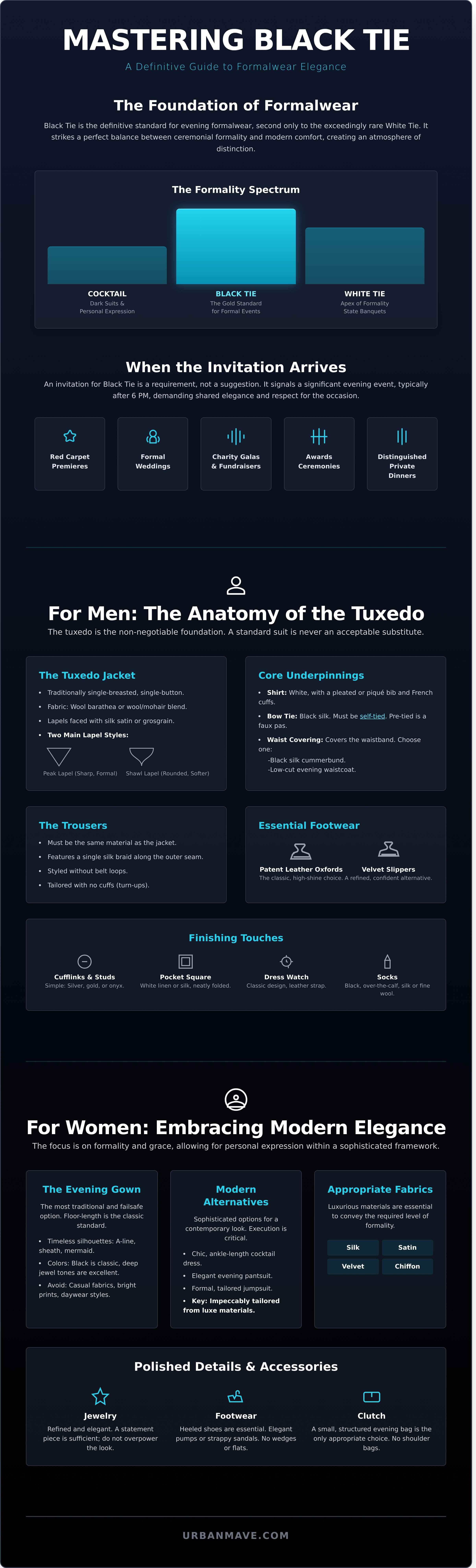
Black tie is the definitive standard for evening formalwear, a precise language of elegance understood globally. It is second only to the rare and exceedingly formal white tie dress code. Originating in the late 19th century as a less rigid alternative to the tailcoats of the era, the History of Black Tie reveals its evolution into a timeless uniform for sophisticated occasions. It strikes a perfect balance between ceremonial formality and modern comfort.
To appreciate its role, it is essential to understand its context. White tie remains the apex of sartorial tradition, reserved for state banquets and royal events. In contrast, cocktail attire is a step less formal, permitting dark suits and greater personal expression. Black tie occupies the refined space between them, offering a clear and elegant framework for significant evening events.
This dress code is reserved for occasions of importance, creating an atmosphere of distinction. You will encounter it for events such as:
- Formal evening weddings
- Charity galas and fundraisers
- Red carpet premieres
- Awards ceremonies
- Distinguished private dinners
The Philosophy of Black Tie
Adhering to this dress code is a sign of respect for the host, the fellow guests, and the gravity of the occasion. Its focus is on a sophisticated uniformity that elevates the entire event, prioritizing timeless elegance over fleeting personal trends. The result is a collective aesthetic that is both celebratory and impeccably polished, allowing the event itself to take center stage.
When the Invitation Says Black Tie
An invitation specifying this dress code is a requirement, not a suggestion. It signals an event of significance, almost always held in the evening after 6 PM. To disregard the host's wishes is to detract from the intended atmosphere of the occasion. Proper adherence is a fundamental courtesy and an acknowledgment of the event's formal nature. It is a commitment to shared elegance.
Black Tie for Men: The Anatomy of the Tuxedo
The tuxedo is the non-negotiable foundation of men's black tie attire. A standard business suit, regardless of its quality or color, is never an acceptable substitute. The distinction lies in the details, from the satin on the lapels to the stripe on the trousers. The rules are precise and rooted in tradition, a point reinforced by authorities like The Emily Post Institute's black tie guide, which outlines the code's enduring standards. Mastery of this dress code begins with understanding its core components.
The Tuxedo Jacket and Trousers
Fit and fabric are the hallmarks of a quality tuxedo. The jacket is traditionally single-breasted with a single-button closure for a clean, elegant silhouette. Lapels define its character; choose between the sharp, formal peak lapel or the softer, rounded shawl lapel. Both are faced with silk satin or grosgrain. Trousers must be crafted from the same material as the jacket, featuring a single silk braid along the outer seam and tailored without cuffs. For a timeless investment, select a tuxedo in wool barathea or a wool and mohair blend for its superior drape and subtle texture.
The Shirt, Bow Tie, and Waist Covering
The elements worn under the jacket are just as critical. The shirt must be a white dress shirt, distinguished by a pleated or piqué bib front and French cuffs, which require cufflinks. The bow tie is essential and must be black silk. For true sophistication, it should always be self-tied; a pre-tied bow is a detail that connoisseurs will notice. Finally, the point where the shirt meets the trousers must be covered. This is achieved with either a black silk cummerbund or a low-cut evening waistcoat.
Footwear and Finishing Touches
Your choice of footwear and accessories completes the ensemble with precision. The correct shoes are paramount, with two primary options:
- Patent Leather Oxfords: The classic, high-shine choice for ultimate formality.
- Velvet Slippers: A refined and confident alternative, often in black or a deep jewel tone.
Socks must be black, over-the-calf, and made of silk or a fine-gauge wool. Accessories are minimal and elegant: simple cufflinks and shirt studs, often in silver, gold, or onyx. A white linen or silk pocket square, folded neatly, is the only acceptable pocket adornment. The sole piece of jewelry should be a simple, classic dress watch with a leather strap.
Black Tie for Women: Embracing Modern Elegance
For women, the black tie dress code signifies a moment of elevated elegance. While tradition dictates specific guidelines, modern interpretations allow for personal expression within a framework of sophistication. The core principle is formality, conveyed through luxurious fabrics and refined silhouettes. Materials like silk, satin, velvet, and chiffon are appropriate choices. The goal is a look that is polished and graceful, not casual or overly revealing.
The Evening Gown
The floor-length evening gown is the most traditional and failsafe option for a black tie event. It is unequivocally formal. Opt for timeless silhouettes such as an A-line, a sleek sheath, or a dramatic mermaid style. While black is a classic and powerful choice, deep jewel tones like emerald, sapphire, or ruby are equally suitable. Avoid bright, distracting prints, casual fabrics like cotton or linen, and any style that could be mistaken for daywear.
Modern Alternatives to the Gown
Contemporary formalwear offers sophisticated alternatives to the traditional gown. A chic, ankle-length cocktail dress in a high-quality fabric can be appropriate, provided its design is formal. An elegant evening pantsuit or a formal jumpsuit also presents a modern and confident choice. For these alternatives, the execution is critical. Each piece must be impeccably tailored and crafted from luxe materials to maintain the required level of formality.
Accessories, Hair, and Makeup
Final details complete the ensemble. Every element should be considered and polished.
- Jewelry: Choose refined, elegant pieces. A statement earring or a delicate necklace is sufficient; avoid overpowering your look.
- Footwear: Heeled shoes are essential. Select elegant pumps or strappy sandals. Wedges, flats, and casual styles are not appropriate.
- Clutch: A small, structured evening bag or clutch is the only suitable option. It should complement your outfit without competing with it.
- Hair & Makeup: Both should be polished and intentional. An elegant updo, classic waves, and refined makeup are standard. Achieving that flawless, event-ready glow begins with exceptional skin and hair preparation; you can discover ÉVOR for a curated approach to formal event beauty.
Decoding Black Tie Variations: Optional and Creative
The established rules of formal wear are sometimes modified by an event host. While well-intentioned, these variations can create the most confusion for guests. The key is to interpret the host's intent and the nature of the event. When faced with ambiguity, it is always a mark of respect to be slightly overdressed. This approach honors the occasion and ensures your attire is appropriate for a sophisticated setting.
Understanding these modern interpretations of the classic black tie dress code allows for confident and impeccable style.
Black Tie Optional
This dress code offers guests flexibility while encouraging a high standard of formal attire. It is an invitation to dress up without making a tuxedo mandatory. The host is signaling a formal event where elegance is expected.
- For Men: A tuxedo is always the preferred and most appropriate choice. However, a dark, well-tailored suit in charcoal or navy, paired with a conservative tie and leather dress shoes, is an acceptable alternative.
- For Women: The options are versatile yet refined. A floor-length gown, an elegant cocktail dress, or a sophisticated pantsuit are all suitable choices. The focus is on quality fabric and a polished silhouette.
Creative Black Tie
Creative Black Tie allows for personal expression within a formal framework. The foundation of the outfit remains formal, but it is elevated with trendy, artistic, or unique touches. This is an opportunity to showcase individual style through carefully selected details and quality materials.
- For Men: Depart from the classic tuxedo with a velvet or brocade dinner jacket in a deep jewel tone. A patterned bow tie, unique cufflinks, or elegant dress loafers can add a distinctive, yet refined, touch.
- For Women: This is a chance to experiment with fashion-forward choices. Consider a gown with a bold print, an architectural silhouette, or pair a classic dress with statement jewelry. The essence is formal, but with a contemporary, personal signature.
Showcasing your personal style can also be about the conversations you start. Being well-read on contemporary culture and diverse stories can be just as impactful as a unique accessory. For those looking to expand their literary horizons, The best LGBTQ+ e-books provide a wealth of compelling narratives.
Common Mistakes and Etiquette to Remember
Mastering the black tie dress code is a matter of precision. Simple errors can detract from an otherwise polished appearance, and the distinction between a good outfit and a great one lies in these details. Many mistakes stem from treating formalwear like business attire. Adhering to established etiquette is not merely about rules; it is a sign of respect for your host and the significance of the occasion.
What Men Should Avoid
A gentleman's ensemble is defined by its specific components. Deviating from the standard undermines the formality of the look. Common missteps include:
- Wearing a necktie. A bow tie, preferably one you tie yourself, is the only correct neckwear for a tuxedo.
- Choosing a notched lapel jacket. This is a feature of a business suit. A tuxedo requires a peak lapel or a shawl collar.
- Using a belt. Trousers should be held up with braces (suspenders) to maintain a clean, uninterrupted line.
- Forgetting a waist covering. A cummerbund or a formal waistcoat is essential to conceal the shirt fabric at the waist.
What Women Should Avoid
For women, elegance is achieved through appropriate choices in silhouette, fabric, and accessories. The goal is sophistication, not distraction. Avoid these common oversights:
- A dress that is too short. A classic black tie event calls for a floor-length gown or an elegant cocktail dress that is at least knee-length.
- Casual fabrics. Materials like cotton, jersey, or linen are too informal. Opt for luxurious textiles such as silk, satin, or velvet.
- An everyday handbag. A large shoulder bag is out of place. A small, elegant clutch is the correct and practical choice.
- Over-accessorizing. Select one or two refined pieces of jewelry. The aim is to complement the gown, not compete with it.
General Etiquette Points
Beyond the attire, certain conduct completes a polished presence. These courtesies demonstrate respect for the event's formality.
- Refrain from removing your jacket unless the host or guest of honor does so first.
- Ensure your shoes are immaculately clean and polished before you arrive.
- Punctuality is paramount. Arrive on time and adhere to the event's schedule.
True elegance is found in both the quality of your attire and the consideration of your conduct. Ensure your wardrobe is prepared for any formal invitation. Discover timeless pieces for any occasion.
Embrace Timeless Elegance
Understanding formalwear is an exercise in quiet confidence and precision. This guide has illuminated the core principles, from the sharp anatomy of the men's tuxedo to the modern grace of women's attire. True mastery lies not just in following rules but in appreciating the tradition they represent. By avoiding common missteps and embracing proper etiquette, you transform the black tie dress code from a requirement into a personal statement of sophisticated style.
This philosophy of enduring style is at the heart of our brand. Each piece in our collection is handpicked for its timeless design and exceptional quality, curated for a modern, sophisticated lifestyle. We focus on creating apparel that provides effortless elegance, allowing your own confidence to be the focal point. These are not garments for a single season, but investments in a refined wardrobe.
Prepare for your next formal occasion with pieces that reflect impeccable taste. Explore our collection of timeless apparel.
Step forward with poise and authenticity.
Frequently Asked Questions
What is the difference between black tie and white tie?
White tie is the most formal dress code, reserved for state dinners and royal events. It requires a black tailcoat, a white waistcoat, and a white bow tie for men. For women, a floor-length ball gown is mandatory. Black tie is a step below in formality. This code requires men to wear a tuxedo with a black bow tie. Women should wear a floor-length gown or a sophisticated cocktail dress, depending on the event's specific tone.
Can I wear a black suit to a black tie event?
A tuxedo is the correct and expected attire for a black tie event. A standard black business suit lacks the specific details, such as satin lapels, that define formalwear. While a high-quality, dark suit may be acceptable for 'black tie optional' events, it does not meet the standard for a strict dress code. Adhering to the tuxedo requirement demonstrates respect for the occasion and the host's request for a formal, elegant atmosphere.
Do I have to wear a cummerbund with my tuxedo?
Traditionally, a waist covering is a non-negotiable element of a tuxedo. Its purpose is to create a clean, unbroken line from the trousers to the shirt, concealing the waist. You should wear either a cummerbund or a low-cut waistcoat. Forgoing a waist covering is a modern interpretation, but including one demonstrates a commitment to classic, precise tailoring and the timeless rules of formal dress.
Can women wear a short dress to a black tie wedding?
While floor-length gowns are the traditional standard, a shorter dress can be appropriate if its design is sufficiently formal. A sophisticated cocktail or midi-length dress crafted from a luxurious fabric like silk, velvet, or brocade is a suitable modern choice. Avoid casual materials or silhouettes. The key is to maintain an elevated level of elegance that respects the formality of the wedding ceremony and reception.
Is it acceptable to wear a watch with a tuxedo?
The most traditional view is that a watch should not be worn with a tuxedo, as a gentleman should not be concerned with time at a formal event. However, modern etiquette permits a very specific type of timepiece. If you choose to wear one, it must be a simple and elegant dress watch. It should have a thin case, a black leather strap, and a clean, minimalist dial. Sport watches or oversized designs are never appropriate.
What does 'black tie optional' really mean for guests?
This dress code indicates the hosts will be wearing formal attire and prefer their guests to do the same. A tuxedo is the ideal choice for men. However, the 'optional' provides flexibility. If a tuxedo is unavailable, a dark, impeccably tailored suit in black, charcoal, or navy is an acceptable alternative. It should be paired with a conservative tie and formal leather shoes. The goal is to maintain a high standard of dress, even with this slight concession.
Are there color rules for women's black tie attire?
Women have significant freedom with color in black tie attire. Classic, deep jewel tones like emerald, sapphire, and ruby are timeless choices, as are elegant metallics. While black is always a sophisticated option, there is no rule against wearing other colors. The focus should remain on the formality of the silhouette and the quality of the fabric, ensuring the overall look is polished and appropriate for an evening event. Subtlety is key.


