

7 Sophisticated Alternatives to Fast Fashion for a Timeless Wardrobe
The most expensive wardrobe is the one filled with cheap clothes. It’s a familiar cycle. A closet overflowing with items, yet nothing feels right. Garments lose their shape after only a few washes, and the search for durable, sophisticated alternatives to fast fashion can feel overwhelming. According to a 2017 report by the Ellen MacArthur Foundation, the average number of times a garment is worn has decreased by 36% in just 15 years. This constant replacement is the true cost.
This guide offers a clear path away from that cycle. We promise to show you how to transition from disposable trends to a curated, high-quality wardrobe that reflects both modern elegance and ethical responsibility. We will explore seven precise strategies, from identifying superior materials to investing in brands committed to true craftsmanship, helping you cultivate a more intentional relationship with your personal style.
Key Takeaways
- Understand the core principles of 'Slow Fashion' to move beyond disposable trends and build a lasting wardrobe.
- Compare four key alternatives to fast fashion-from rental to ethical designers-to find the right path for your lifestyle.
- Implement practical strategies, like the 'One In, One Out' rule, to curate your collection with intention.
- Learn to identify high-quality natural and innovative fibers that ensure longevity and timeless style.
What are Alternatives to Fast Fashion? Defining the New Standard
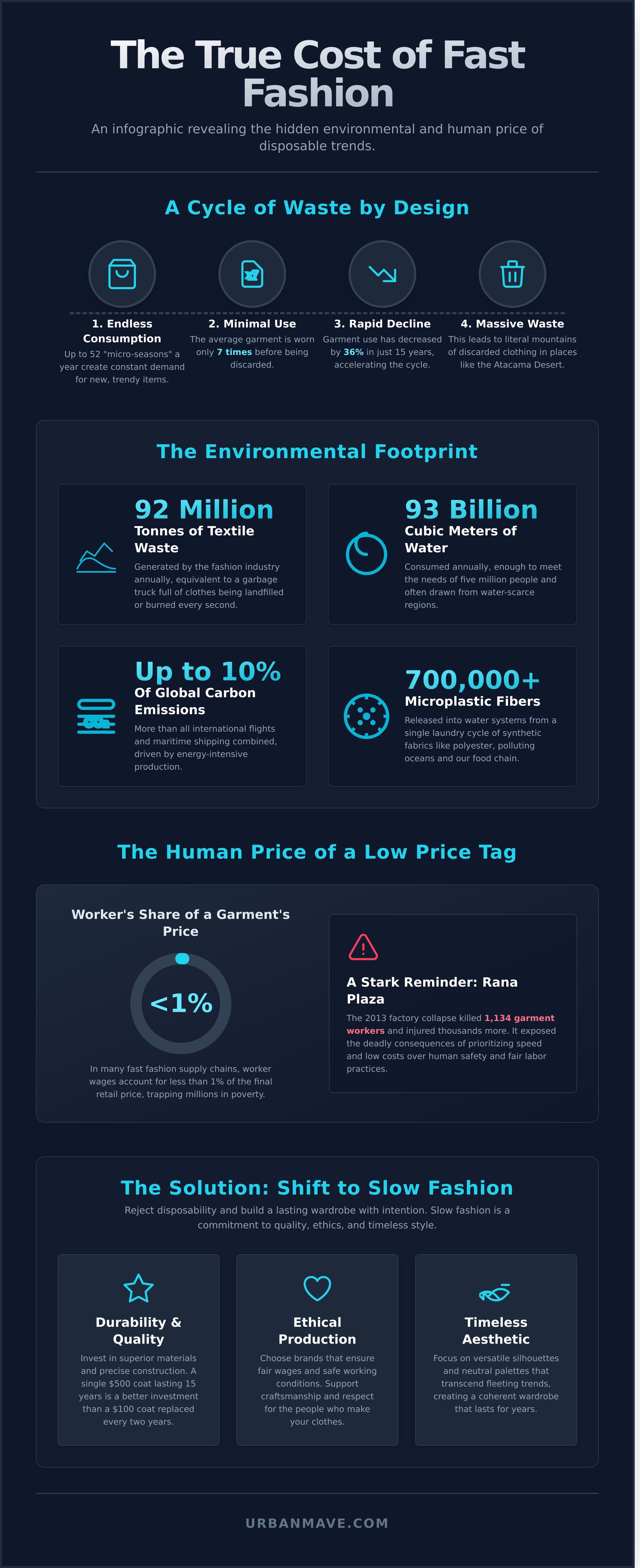
Fast fashion operates on a model of speed, volume, and disposability. Brands release up to 52 micro-seasons per year, creating an endless cycle of consumption. The average garment is now worn just seven times before being discarded, according to a 2017 report by the Ellen MacArthur Foundation. This system is designed for obsolescence. It's an unsustainable model reaching its breaking point.
The necessary response is a deliberate shift toward quality over quantity. This movement introduces thoughtful alternatives to fast fashion, grounded in a philosophy known as 'Slow Fashion'. It’s a transition away from chasing fleeting trends and toward the intentional curation of a personal, timeless wardrobe. This isn't just a niche interest; it's a cultural reset. Projections show the global secondhand market, a key pillar of this shift, will reach nearly $350 billion by 2027. This momentum positions 2026 as a landmark year for the 'Conscious Consumer', where informed choices become the new standard of luxury.
The Core Pillars of Slow Fashion
Slow Fashion is not an aesthetic. It is a set of principles built on respect for people, the environment, and craftsmanship. The entire approach is a core tenet of the broader Sustainable fashion movement, which advocates for a fundamental change in how we produce and consume clothing. Its foundation rests on three distinct pillars:
- Durability: Garments are designed to last for decades, not weeks. This is achieved through superior materials like full-grain leather and high-tensile strength fabrics, combined with precise construction techniques. The goal is to create pieces that improve with age.
- Ethical Production: The system ensures fair wages and safe working conditions for every artisan and craftsperson. The Clean Clothes Campaign reports that in many fast fashion supply chains, worker wages account for less than 1% of an item's retail price. Slow Fashion directly counters this exploitation.
- Minimalist Aesthetic: Design focuses on timeless silhouettes, neutral palettes, and functional details. These pieces transcend seasonal trends, forming a versatile and coherent wardrobe that remains relevant year after year.
Why Your Wardrobe Needs a Reset
The constant pressure to consume creates psychological fatigue. A closet overflowing with low-quality items leads to decision paralysis, not satisfaction. This cycle also presents a significant financial drain. A single $500 coat designed to last fifteen years is a more prudent investment than purchasing a new $100 coat every two years. It's a simple calculation of value over volume.
Adopting alternatives to fast fashion means investing in yourself and in a more sustainable future. It's a quiet rejection of the noise and a return to what matters. Slow Fashion is a commitment to craft and longevity.
The True Cost of Speed: Why We Are Moving Away from Fast Fashion
The appeal of fast fashion is its immediacy. It offers instant access to trends at a low price point. This model, however, is built on disposability and comes with a severe, often hidden, cost. The fashion industry is responsible for an estimated 92 million tonnes of textile waste annually. It also consumes around 93 billion cubic meters of water each year, enough to meet the needs of five million people. These facts are not abstract statistics; they represent a systemic crisis. This reality is driving a necessary and conscious shift toward sustainable alternatives to fast fashion.
The Environmental Footprint Explained
The damage begins at the fiber level. Synthetic fabrics like polyester and nylon, which dominate fast fashion, are essentially plastics. A single laundry cycle can release over 700,000 microplastic fibers into our water systems, eventually polluting oceans and entering the food chain. The industry's carbon footprint is equally significant, accounting for up to 10% of global carbon emissions from energy-intensive production and complex global shipping routes designed for speed, not efficiency. The full scope of the environmental costs of fast fashion becomes visible in places like Chile's Atacama Desert, where literal mountains of discarded clothing accumulate, a testament to our culture of overconsumption.
The environmental toll is matched by a human one. A $10 t-shirt is only possible because someone, somewhere in the supply chain, is paying the price. The 2013 Rana Plaza factory collapse in Bangladesh, which killed 1,134 garment workers and injured thousands more, remains a stark reminder of this reality. A low price tag is often subsidized by unsafe working conditions and wages that fail to provide a decent standard of living. This is the uncomfortable truth behind disposable trends.
Identifying Greenwashing in 2026
As awareness grows, so does "greenwashing"-the practice of making misleading claims about environmental benefits. By 2026, discerning between genuine effort and marketing will be a critical skill. Here is what to look for:
- Vague vs. Certified: Brands often use ambiguous terms like 'eco-friendly' or 'conscious'. These words are meaningless without proof. Look for verifiable, third-party certifications like the Global Organic Textile Standard (GOTS) or Fair Trade, which provide objective assurance of ethical and environmental standards.
- The 'Conscious Collection' Trap: A small collection of organic cotton basics cannot offset the millions of petroleum-based garments a company produces. This tactic allows a brand to project a sustainable image while its core business model remains unchanged. Judge a brand by its total output, not its token sustainable line.
- The Demand for Transparency: True accountability requires a transparent supply chain. A brand must be able to trace its materials and verify its labor practices. This commitment to a clear, traceable process is fundamental to creating truly timeless pieces. Choosing durable, transparently-made clothing is one of the most effective alternatives to fast fashion.
Ranking the Best Alternatives to Fast Fashion
Choosing to move beyond fast fashion is a deliberate act. It requires a new framework for building a wardrobe. The path isn't singular; it's a strategic combination of four distinct approaches. Each carries its own balance of investment, convenience, and aesthetic control. A truly sustainable closet isn't built on one method, but on a thoughtful integration of them all.
Understanding the trade-offs is the first step. Consider these primary alternatives to fast fashion and their core attributes:
- Second-hand & Vintage: Offers unique character at a lower cost. The trade-off is time. Sourcing quality pieces requires patience and a discerning eye. Style consistency can be a challenge.
- Rental Services: Provides access to high-end fashion for specific events without the commitment of ownership. It excels for temporary needs, not for building a core wardrobe.
- Ethical Designer Brands: The foundation of a lasting wardrobe. This path prioritizes quality craftsmanship and timeless design. The initial investment is higher, but the long-term value is superior.
- DIY & Mending: The most personal approach. Repairing or altering existing garments extends their life and creates one-of-a-kind pieces. It demands both skill and time.
A functional, elegant wardrobe often uses a hybrid model. Foundational items come from ethical designers. Unique accents are sourced from curated vintage shops. A rental service covers the rare formal event. This balanced strategy is both practical and sustainable.
Ethical Designer Brands vs. High-Street
The financial logic of slow fashion centers on one key metric: cost-per-wear. A $200 knit polo made from premium Pima cotton with precise stitching will endure over 100 washes. Its cost-per-wear drops to $2. In contrast, a $40 fast-fashion version often degrades after just 10 washes, resulting in a $4 cost-per-wear and the need for replacement. The initial investment in quality is a direct investment in longevity and value. Curated boutiques and online marketplaces simplify this search, vetting brands for their commitment to sustainable materials and ethical production.
The Rental and Resale Revolution
The global fashion resale market is not a niche interest; it's a powerful economic force projected by GlobalData to grow to $350 billion by 2027. This growth is driven by sophistication. Thrifting has evolved from digging through bins to browsing curated online platforms. For luxury goods, services like Vestiaire Collective and The RealReal provide teams of authenticators who verify every item, removing the risk from purchasing pre-owned designer pieces. For one-off events like weddings or galas, rental platforms offer a practical solution. You gain access to a specific garment for a fraction of its retail price, eliminating the waste of a single-use purchase.
Building a Timeless Wardrobe: Practical Steps to Transition
Moving away from fleeting trends is not about restriction. It’s about intention. Building a timeless wardrobe means curating a collection of pieces that offer longevity, versatility, and a refined sense of personal style. This is one of the most effective alternatives to fast fashion because it fundamentally changes your relationship with clothing from disposable to deliberate.
The transition begins with a few core principles. First, adopt the 'One In, One Out' rule. For every new item that enters your wardrobe, one must leave. This simple discipline prevents accumulation and forces a conscious evaluation of what you truly need. Second, before any purchase, ask yourself the 30-wear test question, a concept popularized by sustainability advocate Livia Firth: "Will I wear this a minimum of 30 times?" If the answer is no, the item doesn't belong in your long-term collection.
Finally, learn to identify quality construction in under 20 seconds. It’s a skill that protects your investment.
- Check the Seams: Gently pull the fabric at the seams. High-quality stitching is dense and tight, with no visible gaps. Poor construction will reveal strain immediately.
- Examine the Finishings: Look at buttonholes and hems. Are they neat and securely stitched, or are there loose, fraying threads? Quality is found in the details.
- Assess the Fabric: Feel the material. A quality garment has a substantial weight and texture. A flimsy, thin fabric often signals a short lifespan.
Fabric Knowledge: The Minimalist's Secret Weapon
The foundation of any lasting garment is its material. Natural and innovative fibers provide the durability and comfort essential for a timeless wardrobe. Materials like Lyocell and its branded version, Tencel, represent the future of sustainable softness. Derived from wood pulp in a closed-loop process that recycles over 99% of its solvents, these fabrics offer a beautiful drape with a low environmental impact. Learn more about Lyocell and sustainable fabrics and their role in modern design.
Classic choices like organic cotton, linen, and traceable wool remain cornerstones of quality. They are breathable, durable, and age with grace, developing character over time rather than deteriorating. Investing in superior materials is the first step toward building a wardrobe that endures.
The Art of the Capsule Wardrobe
A capsule wardrobe is not about owning less; it’s about ensuring everything you own has a purpose. The process starts with a cohesive color palette. Select two or three base neutrals like black, navy, ivory, or grey. These tones provide a versatile canvas for every outfit.
From there, identify your essential silhouettes. A well-curated collection might include a precisely tailored trouser, a classic knit polo, and a versatile leather sandal. Each piece should be chosen for its ability to function in multiple contexts. A single pair of tailored trousers, for example, can be styled for three distinct occasions: paired with a silk blouse for the office, a simple t-shirt for a casual weekend, or a refined camisole for an evening out. This focus on versatility is the essence of a minimalist, sustainable approach to style. Begin building your own foundation of timeless pieces with our collection of meticulously crafted essentials.
The Urban Mave Philosophy: Curated Quality for Modern Life
Moving beyond the cycle of temporary trends requires a shift in perspective. Urban Mave was founded on this principle, acting as a bridge between uncompromising high-end design and thoughtful, conscious consumption. We don't chase seasons; we create companions for your journey. Our work is a direct response to the waste and noise of the modern market, offering a quiet, confident alternative for those who value substance.
Each item in our collection is handpicked, a testament to our commitment to timeless style and enduring quality. This isn't about accumulating more. It's about acquiring the right pieces that enhance your life through superior sophistication and flawless functionality. We believe true luxury is understated. It's found in the integrity of the materials and the precision of the craft. For the modern professional, this concept of 'Quiet Luxury' is not a trend, it is a standard. It is the core of our philosophy and one of the most effective alternatives to fast fashion.
Sophistication Meets Responsibility
Our commitment to quality begins with sourcing. We select premium, natural materials like full-grain Italian leather and fine designer knits, chosen for their durability and graceful aging. Production is kept local and in small batches, often fewer than 50 units per design, to ensure meticulous oversight and minimize waste. This approach allows local artisans to apply their skills without compromise. The result is not just a product, but a 'forever favorite' designed to be a permanent, reliable part of your wardrobe for over a decade.
Start Your Journey Today
Building a sustainable wardrobe can feel overwhelming. We simplify the process. Our curated collections for men and women remove the guesswork, offering only pieces that meet our strict criteria for design, material, and craftsmanship. The benefit of choosing a store that does the 'vetting' for you is confidence. You can trust that every item represents a sound investment in your personal style and values. Your transition to a more considered wardrobe begins with a single, well-chosen piece.
We invite you to discover a more intentional way of dressing. Find pieces that resonate with your life and your principles. These are the true alternatives to fast fashion, built on a foundation of quality and respect for craft. Explore the Urban Mave Collection.
Beyond the Trend: Curate Your Timeless Wardrobe
Choosing to move beyond the cycle of trends is a definitive statement. It’s a commitment to quality over quantity, a direct response to the 92 million tons of textile waste generated each year. Building an intentional wardrobe means every piece is selected for its superior craftsmanship and enduring design. These sophisticated alternatives to fast fashion are more than a purchase; they are an investment in a personal, sustainable style.
At Urban Mave, this philosophy is our foundation. We curate handpicked designer goods that embody a timeless, minimalist aesthetic and sophisticated functionality. With global shipping, we bring pieces designed to be cherished directly to you, wherever you are.
Your journey toward a more thoughtful collection begins now. Invest in quality. Shop the Urban Mave Curated Collection.
Frequently Asked Questions
Is sustainable fashion always more expensive than fast fashion?
No, sustainable fashion is not always more expensive when you consider its long-term value. A fast fashion item might cost $20 but last for only 10 washes. A well-made, ethically produced t-shirt costing $80 can last over 100 washes, making its cost-per-wear less than $0.80. This approach redefines value beyond the initial price. It's an investment in quality and durability, a core principle of slow fashion.
What are the easiest ways to start quitting fast fashion today?
The easiest way to start is by implementing a 30-day waiting period before any new purchase. This simple rule helps curb impulse buys, which account for nearly 40% of all fashion purchases according to a 2023 consumer report. Also, begin by repairing one item you already own instead of replacing it. Learning a basic stitch or finding a local tailor extends the life of your garments and builds a more conscious wardrobe.
Which fabrics are considered the most sustainable in 2026?
By 2026, materials like organic linen, hemp, and TENCEL™ Lyocell are considered the most sustainable choices. Organic linen requires 60% less water than conventional cotton and no pesticides. Hemp regenerates soil and absorbs more CO2 per hectare than most commercial forests. TENCEL™ Lyocell is produced from eucalyptus trees in a closed-loop system that recycles over 99% of its water and solvents, representing a true commitment to environmental responsibility.
How can I tell if a brand is actually ethical or just greenwashing?
You can identify genuine ethical brands through radical transparency and third-party certifications. A transparent brand will name its specific factories, like "Artisan Mill, Guimarães, Portugal," not just claim "Made in Europe." Look for current certifications like Fair Trade, GOTS, or B Corp. If a brand's sustainability claims use vague terms like "eco-friendly" without providing data or reports from 2024 or later, it is often a sign of greenwashing.
Does buying second-hand fast fashion count as a sustainable alternative?
Yes, buying second-hand fast fashion is a sustainable act because it extends a garment's life. Extending the active life of clothing by just nine months can reduce its carbon, water, and waste footprints by 20-30%, as noted by the WRAP foundation. While it doesn't support unethical production directly, it keeps items from landfills. It is a practical step and one of the most accessible alternatives to fast fashion.
Can I still be 'on-trend' while following a slow fashion philosophy?
Yes, you can remain stylish by focusing on timeless design instead of fleeting trends. Slow fashion prioritizes classic silhouettes, quality materials, and a versatile color palette that endures beyond seasonal cycles. A well-crafted trench coat or a minimalist leather tote remains relevant for decades, not just the six weeks of a micro-trend. True style is about personal expression and longevity, not disposable consumption.
What should I do with my old fast fashion clothes?
Your first option for old fast fashion clothes should be repair or responsible donation. If an item is still wearable, donate it to a local shelter, not a large for-profit collection bin. For damaged items, use textile recycling programs like BluejeansgoGreen. Over 85% of textiles end up in landfills in the U.S. alone, so finding a proper disposal stream is crucial. Never simply throw them in the trash.
Is it better to buy one expensive ethical item or three cheaper ones?
It is almost always better to invest in one high-quality, ethically made item. This choice aligns with a cost-per-wear model. A single $150 linen shirt that lasts five years is a superior investment to three $50 polyester shirts that must be replaced annually. Quality craftsmanship ensures durability, reducing long-term costs and consumption. This deliberate purchasing is a foundational practice for anyone seeking true alternatives to fast fashion.


