

The Natural Fiber Clothing Benefits: A Guide to Tactile Luxury
The modern wardrobe is a paradox. It’s filled with more pieces than ever, yet offers less true comfort, less durability, and less personal satisfaction. You've likely experienced the compromise: the irritation from a synthetic blend, the disappointment of a garment that pills after a few wears, or the persistent odor that clings to polyester. This cycle of disposable fashion promises variety but delivers frustration.
This guide moves beyond that compromise. Here, we explore the definitive natural fiber clothing benefits, showing why materials like linen, wool, and cotton are the foundation for a truly sophisticated wardrobe. You will discover how to curate a collection that offers unparalleled comfort, health, and longevity, investing in pieces that last for years, not just a season. We will detail the tactile luxury, inherent breathability, and sustainable elegance that define these timeless textiles.
Key Takeaways
- Learn how natural fibers like wool and linen regulate body temperature to provide comfort in any season.
- Understand why natural materials resist odor and require less frequent washing, preserving their integrity over time.
- Explore the complete natural fiber clothing benefits, from superior breathability for skin health to the long-term value of investing in quality.
- Distinguish between key fibers like cotton and linen to make intentional, sophisticated choices for your wardrobe.
What Are Natural Fibers? The Foundation of Timeless Style
Natural fibers are the origin point of all true quality in clothing. They are filaments derived directly from plant or animal sources, a stark contrast to synthetics created in a laboratory. At their core, What Are Natural Fibers? They are a return to authenticity. Your skin recognizes this difference instinctively. A garment made from linen or wool feels familiar, a tactile connection to the natural world that polyester can't replicate. It's a quiet language of quality, understood through touch before sight.
This video offers a personal perspective on making the switch to natural materials.
For millennia, materials like linen, wool, and silk were the undisputed cornerstones of high-end tailoring and craftsmanship. Their value was inherent. The modern return to these materials isn't a trend; it's a conscious correction. It is a direct response to the fatigue caused by fast fashion's model of 52 micro-seasons per year, a system built on disposability. Choosing natural fibers is choosing permanence over fleeting style. It's an investment in pieces that endure, both in construction and in aesthetic relevance.
Plant-Based vs. Animal-Based Fibers
The source of a fiber dictates its essential character. Each category offers a unique set of properties that translate directly into the look and feel of a finished garment. Understanding this distinction is fundamental.
- Plant-Based (Cellulose): These fibers offer structure and breathability. Cotton provides softness, linen its signature crisp texture, and hemp its durable strength. Modern innovations like Lyocell (TENCEL™) offer a fluid drape derived from wood pulp.
- Animal-Based (Protein): These fibers are known for softness, insulation, and luster. Merino wool provides exceptional warmth without weight, cashmere offers unparalleled softness, and silk delivers a unique, elegant sheen.
The Aesthetic of Natural Textures
The beauty of natural fibers lies in their perfect imperfections. The subtle slubs in a linen shirt or the organic variance in raw silk are not flaws. They are marks of authenticity that create a "quiet luxury" aesthetic. This visual depth is something synthetics cannot imitate. Natural fibers absorb dye into their core, resulting in rich, dimensional color. Polyester, in contrast, is simply coated, often creating a flat, lifeless appearance. Building a minimalist wardrobe around these organic textures is one of the most significant natural fiber clothing benefits. It creates a cohesive, sophisticated look rooted in quality, not logos.
Biological Benefits: Why Your Skin Prefers Natural Materials
Your skin is your body's largest organ. It breathes, regulates temperature, and protects you. The materials you place against it directly impact its ability to function. Synthetic fabrics, derived from petrochemicals, create an artificial barrier. Natural fibers work in harmony with your skin. They are an extension of a biological system, not an obstruction to it.
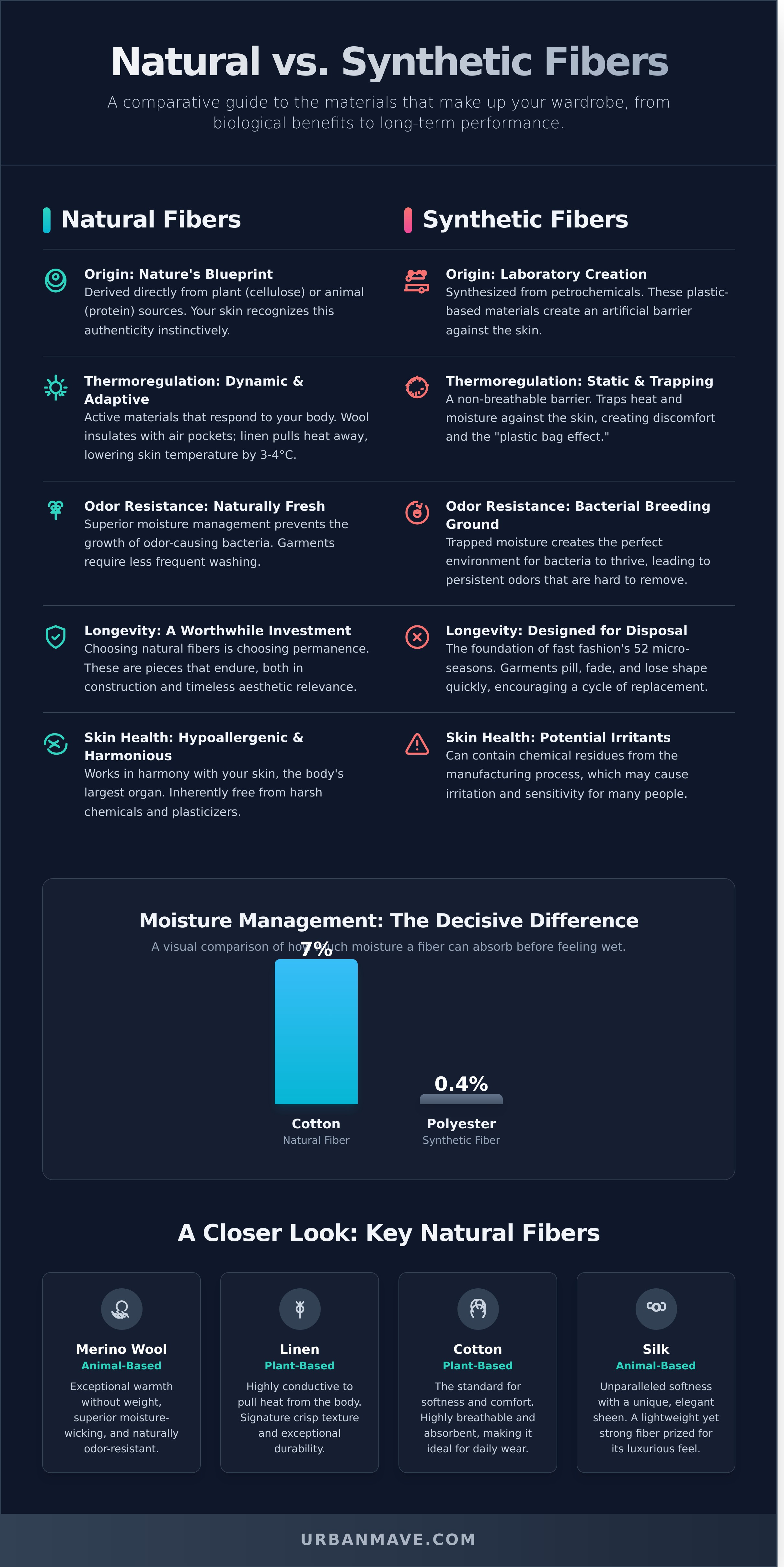
The core difference lies in moisture management. Synthetic materials like polyester and nylon are fundamentally plastic. They are non-absorbent and trap moisture against your skin, creating what is known as the "plastic bag effect." This environment is a breeding ground for odor-causing bacteria and leads to discomfort and irritation. Consider the data: polyester can only absorb 0.4% of its own weight in moisture before feeling wet. Cotton, a simple natural fiber, absorbs 7%. This distinction is not minor; it defines your physical comfort.
The Science of Thermoregulation
Natural fibers are active materials. They respond to your body and its environment with remarkable intelligence. This dynamic quality is central to the natural fiber clothing benefits that synthetics cannot replicate. They help your body maintain a stable temperature, a process called thermoregulation.
Merino wool is the ultimate performance fiber. Its fibers have a natural crimp, creating thousands of tiny air pockets. These pockets trap body heat to keep you warm in the cold. In warmer conditions, the wool transports sweat and moisture vapor away from the skin, creating a cooling effect. Linen possesses a different structure. Its hollow fibers and unique molecular composition make it highly conductive, actively pulling heat away from the body. This is why linen feels cool to the touch and can help lower skin temperature by 3-4 degrees Celsius compared to cotton.
Skin Health and Sensitivity
Choosing natural fibers is a direct investment in your skin's health. They are inherently hypoallergenic because they lack the harsh chemicals, plasticizers, and microplastics found in synthetic textiles. For those with sensitive skin or conditions like eczema, the choice is clear. The National Eczema Association frequently recommends materials like cotton, silk, and linen to minimize flare-ups.
The structural integrity of these materials also plays a crucial role. They absorb moisture into their core, keeping the surface against your skin dry. Synthetics simply trap it between the fabric and your body. This difference is critical for maintaining a healthy skin microbiome. A commitment to pure, natural materials is a commitment to long-term comfort. Explore our collection of minimalist linen essentials, designed with this philosophy at their core. The durability of these materials ensures their function isn't a fleeting luxury; extensive research into the performance and longevity of natural fibers confirms their lasting value.
Performance and Longevity: The Odor and Maintenance Paradox
True luxury is defined by performance, not by high maintenance. A common misconception positions natural materials as delicate. The reality is precisely the opposite. The best materials require less intervention. This is the paradox of natural fibers: superior performance and longevity are achieved through minimal care. Understanding these inherent natural fiber clothing benefits reveals a smarter, more sustainable approach to building a wardrobe.
Quality garments should not demand constant attention. They should integrate seamlessly into your life. Natural fibers like wool and cotton possess a unique structure that outperforms synthetics in wearability and durability, proving that true value lies in materials that endure.
Why Synthetics Smell Faster
Synthetic fabrics, like polyester, develop odor more quickly. The reason is scientific. These fibers are hydrophobic; they repel moisture. This forces sweat to sit on the surface, creating an ideal environment for bacteria to multiply. A 2014 study in Applied and Environmental Microbiology found that Micrococcus bacteria, a primary source of body odor, thrive on polyester surfaces. Natural fibers, in contrast, are hygroscopic. They absorb moisture vapor from your skin before it can become liquid sweat, keeping you drier and fresher for longer. Furthermore, materials like merino wool and hemp contain inherent antimicrobial properties that actively inhibit bacterial growth.
The Low-Frequency Washing Benefit
Washing less is a luxury. Each wash cycle degrades a garment’s fibers, slowly diminishing its structure and lifespan. By choosing natural materials that stay fresh, you preserve the integrity of your investment pieces. This practice also has a significant environmental impact. A single 6kg wash of polyester-based clothing can release an estimated 700,000 microplastic fibers into our waterways. Reducing wash frequency is a core element of the sustainability advantages of natural fibers, directly lowering your environmental footprint. You can easily refresh your garments between washes.
- Airing: Hang wool or linen pieces outdoors or in a well-ventilated space for a few hours.
- Steaming: A light steaming can remove wrinkles and neutralize minor odors.
- Spot Cleaning: Address small stains with a damp cloth and mild soap instead of a full wash.
This considered approach extends to durability. Natural fibers like long-staple cotton or merino wool are less prone to pilling than synthetics. Pilling occurs when short, weak fibers break and tangle on the surface. Synthetics often use these shorter fibers, leading to a worn appearance after only a few cycles. A well-crafted natural garment, however, maintains its smooth finish. It doesn't just last; it matures. It becomes a timeless, heirloom piece that transcends fleeting trends.
Choosing the Right Fiber for Your Lifestyle
A curated wardrobe is built on intention. The fabric of a garment dictates its performance, its comfort, and its character. Selecting the right material is not an afterthought; it is the foundation of personal style and function. Understanding these materials is key to maximizing the natural fiber clothing benefits that align with your daily demands.
Each fiber possesses a distinct personality. Cotton is the versatile staple, offering durable comfort for daily life. Linen provides sophisticated ease, the definitive choice for warm-weather dressing. Silk delivers unrivaled elegance with a surprising ability to regulate temperature. And modern innovations like Lyocell bridge the gap between technology and nature, offering exceptional softness and a sustainable profile. You can learn more in our complete guide to Lyocell fabric.
Your lifestyle determines the ideal material. A professional setting requires structure and resilience, while casual moments call for softness and breathability. The most effective wardrobes are built with this distinction in mind.
The Professional Wardrobe: Wool and Silk
Wool remains the gold standard for professional suiting and knitwear. Its natural crimp creates millions of tiny air pockets, providing insulation while allowing the skin to breathe. This structure also gives wool superior wrinkle resistance and shape retention. A lightweight tropical wool suit, typically 200-250 gsm (grams per square meter), is ideal for year-round wear, while a heavier flannel at 300-400 gsm offers substantial warmth. Silk serves as the perfect base layer. Its protein structure wicks moisture away from the body, keeping you comfortable during long days. A simple silk shell under a blazer offers a high-end sheen and functional elegance.
The Casual Edit: Linen and Organic Cotton
Mastering a relaxed yet refined aesthetic begins with linen and high-quality cotton. Linen’s texture and crisp drape create a look of effortless sophistication. For a modern smart-casual appearance, pair a structured linen blazer with a premium t-shirt. The distinction between standard cotton and long-staple organic varieties is significant. Long-staple fibers, like those in Pima cotton (over 1.125 inches), create a smoother, more resilient yarn that resists pilling. This elevates a simple garment from basic to essential. Explore our curated collection of linen and long-staple cotton essentials to build your timeless casual wardrobe.
Ultimately, the thoughtful selection of materials transforms a collection of clothes into a functional, expressive wardrobe. These natural fiber clothing benefits extend beyond simple comfort; they define an aesthetic and support a life lived with purpose.
Transitioning to a Natural Wardrobe with Urban Mave
Adopting natural fibers is a deliberate choice. It’s a move away from the disposable and toward the enduring. This transition doesn't require a complete overhaul of your existing wardrobe overnight. Instead, it is a thoughtful process of acquiring key, high-quality pieces that serve you for years. At Urban Mave, our philosophy is rooted in this principle. We offer handpicked, timeless essentials designed for a modern, minimalist lifestyle. Each piece is an investment in quality, craft, and longevity.
The core of this transition is understanding value beyond the price tag. Consider the cost-per-wear. A fast-fashion shirt costing $30 might seem affordable, but if it loses its shape after just ten washes, its cost is $3 per wear. A precisely crafted merino wool polo from Urban Mave, priced at $180, retains its form and function for over 150 wears. Its cost-per-wear drops to just $1.20. This simple calculation reveals the economic sense of investing in superior, natural materials. You aren’t just buying clothing; you are acquiring assets for your personal collection.
Identifying genuine natural fibers is a critical skill. While shopping, your first step should always be the garment label. Look for compositions of 100% cotton, linen, merino wool, or silk. Be cautious of blends where synthetics like polyester or elastane exceed 5%, as they can compromise the material's breathability and texture. Beyond the label, trust your sense of touch. Natural fibers have a distinct feel. Linen is crisp and cool, cotton is soft and breathable, and quality wool has a springy, substantial texture that is never scratchy.
The Curated Selection
Our commitment is to sophisticated, functional design. Every item in the Urban Mave collection is selected to integrate seamlessly into a discerning wardrobe. Our knit polos and accessories, for example, prioritize the natural excellence of merino wool and premium cotton. To begin your journey, we recommend three essential pieces: a versatile merino wool sweater, a perfectly weighted cotton t-shirt, and a breathable linen shirt. These form a timeless foundation.
Care and Maintenance for Longevity
Proper care is essential to protect your investment. The golden rule is to air dry your natural garments whenever possible. The high heat of a machine dryer can damage delicate fibers, causing shrinkage and premature wear. For wool and silk, proper storage is key. Fold wool knits and place them in a drawer with cedar blocks to deter moths. Avoid hanging them, which can stretch the material. By following these simple steps, you ensure you experience the full spectrum of natural fiber clothing benefits for years. Explore the Urban Mave collection of natural fiber essentials.
Elevate Your Wardrobe with Conscious Choices
Shifting to natural fibers is an investment in personal comfort and enduring style. It's a deliberate choice for materials that work with your body. Merino wool, for instance, can absorb up to 30% of its own weight in moisture vapor, keeping you comfortable in a way synthetic materials cannot. This performance, combined with superior longevity, forms the core of the natural fiber clothing benefits. You aren't just buying clothes; you're acquiring timeless pieces designed to last for years, not just a season.
Urban Mave was founded on this principle of intentional quality. We offer a curated collection of designer goods, each selected for its precise craftsmanship and timeless sophistication. With worldwide shipping available, this standard of quiet luxury is accessible to you. Begin building a wardrobe that reflects your values.
Shop the Urban Mave Collection: Timeless Natural Luxury
Frequently Asked Questions
Are natural fibers better for the skin?
Yes, natural fibers are typically better for sensitive skin. Materials like cotton, linen, and silk are naturally hypoallergenic and highly breathable, which minimizes the risk of irritation. A 2017 study in the journal Dermatitis confirmed that synthetic fabrics and their chemical finishes are more common triggers for textile allergies. Natural materials allow moisture to evaporate from the skin, maintaining its balance and preventing the bacterial buildup that causes discomfort.
Why does polyester smell worse than cotton or wool?
Polyester retains odor because its synthetic, non-absorbent fibers create an ideal environment for odor-causing bacteria. A 2014 Ghent University study found that Micrococcus bacteria, a key source of body odor, thrive on polyester. In contrast, natural fibers like cotton and wool absorb sweat, drawing moisture into the fiber itself. This process denies bacteria the surface moisture they need to multiply, keeping the garment fresher for longer.
Do natural fibers shrink more than synthetics?
Yes, natural fibers tend to shrink more than synthetics because of their absorbent cellular structure. A material like cotton can shrink up to 5% in its first wash as its fibers swell with water and then tighten upon drying. To minimize shrinkage, wash natural fiber garments in cold water and either air-dry them or use a low-heat tumble dry setting. Always check the care label for the most precise instructions to maintain the garment's fit.
Is linen more durable than cotton?
Linen is demonstrably more durable than cotton. The fibers derived from the flax plant are naturally longer and are estimated to be two to three times stronger than cotton fibers. This superior strength gives linen excellent resistance to abrasion and tearing. Furthermore, linen improves with use; each wash softens the fabric without weakening its structure, ensuring a timeless piece that gains character and longevity over years of wear.
What are the most breathable fabrics for hot weather?
The most breathable fabrics for warm climates are linen, cotton, and lightweight merino wool. These materials excel at moisture management and airflow. Linen can absorb up to 20% of its weight in moisture before it feels damp, while cotton's moisture regain is around 8.5%. Their natural structures permit air to circulate freely, wicking perspiration from the skin and promoting evaporative cooling to keep you comfortable.
How do I stop my natural fiber clothes from wrinkling?
To minimize wrinkles, remove garments from the dryer while they are still slightly damp and hang them immediately. Using a steamer is often more effective and gentler on fabrics than a traditional iron. For garments that need to stay crisp, look for tightly woven natural fabrics like cotton poplin. You can also select pieces that blend natural fibers with a small percentage, typically under 5%, of a wrinkle-resistant fiber like Lyocell.
Is Lyocell considered a natural fiber?
Lyocell is classified as a semi-synthetic, or regenerated cellulosic, fiber. It originates from a natural source, which is typically the wood pulp of eucalyptus trees. This raw material undergoes a sophisticated, closed-loop manufacturing process where over 99% of the non-toxic solvent and water are recycled. While its production is man-made, its natural origin provides desirable qualities like softness, breathability, and a fluid drape.
Why are natural fiber clothes more expensive?
The higher price of natural fiber clothing reflects the significant resources required for its production. Cultivating raw materials like cotton or flax is more land and labor-intensive than producing synthetics from petroleum. The subsequent processing, spinning, and weaving also demand more time and skilled craftsmanship. These elevated production standards are central to the natural fiber clothing benefits you receive, ensuring superior quality, comfort, and durability in the final garment.


